Showing posts with label paleo. Show all posts

Friday, August 1, 2014

Dijon Vinaigrette Coleslaw & Jamaican Jerk ribs

I have never particularly liked coleslaw growing up. I really despised the one that we'd often get at KFC.  I think it was the creamy-sweetness that turned me off. Maybe this is because Viet coleslaws are not creamy. At any rate, this all changed back in my wheat eating days when my good friend Tuyen introduced me to Bakesale Betty's unholy fried chicken sandwich which was made with a vinaigrette-based coleslaw. It's damn good. I'd pick out all the onions because I was allergic to raw onions back then (the sulfur).  But it opened up my culinary world to non-Viet, non-creamy coleslaws.

It's grilling weather so I picked up some nice country ribs (butt) from Whole Foods; this is a flavorful fatty cut from sustainably raised pork and in the bulk pack (3 lbs+) it's a reasonably priced $4.99/lb comparable to what one would get buying direct from the farmer.  I used a Jamaican Jerk recipe from Bruce Aidell's Complete Book of Pork; I make it mild because my kid doesn't like spicy and we serve with organic habanero sauce on the side.

My favorite coleslaw recipe hands down is Jeremy Fox's Apple Savoy Cabbage which I make with organic fuji apples; for whatever reason, organic apples have been hard to come by this year.  So sans apples, I had to do something different.  I threw this coleslaw together because I happened to have a savoy cabbage in the fridge from a few weeks back.  The coleslaw perfectly complemented the Jamaican Jerk ribs.  

I like savoy cabbage because it is thinner leaves which soften quicker meaning that you can eat it sooner, more digestible.  I toss the shredded cabbage with grey sea salt similar to how one would prepare cabbage for fermenting (sauerkraut or kimchi).  The salt begins to break down the tough cellulose in the cabbage, making it more digestible.  I use the America's Test Kitchen method of shredding (see which ensures you don't end up with large sections of rib.

I recently started using estate grown organic certified olive oil direct from the farmerbecause I boycott the mafia (also why I never ate at Phở Hoà chain even before I stopped eating at phở restaurants).  The 2013 Moonshadow Grove Mission Olive Oil is very spicy so when my daughter is eating, I use mild tasting avocado oil.


Two recipes below--Jerk ribs and dijon vinaigrette coleslaw.

Jerk Marinated Ribs 

(adapted from Bruce Aidell's Complete Book of Pork)

  • 1 dried ancho chile, deseeded
  • 1 sweet onion, quartered
  • 3 garlic cloves, peeled
  • 1 tbs ground allspice
  • 1 tsp Chinese five spice powder
  • 2 tbs organic coconut palm sugar
  • 2 tsp freshly ground black pepper
  • 1 tsp dried thyme
  • 1/4 cup lime juice
  • 1/4 cup olive oil
  • 1/2 tsp ground nutmeg
  • 1/4 tsp cinnamon
  • 1 tsp fennel
  • 1 tsp celtic sea salt
Combine all the ingredients in a food processor and blend to form a paste. Slather it on the rubs. In the best case scenario, you would marinade this the night before. In my usual, fly-by-the-seat-of-my-pants scenario, I grill it when the grill is ready. ("I" being the royal "I" here as you see my husband is doing the actual grilling wearing the new apron I waxed for him for Father's Day.)


Dijon Vinaigrette Coleslaw

4 servings

Ingredients:

  • 1/2 head of savoy cabbage (approx 1.5 lbs)
  • 1/2 tbs of grey sea salt
  • 1/4 cup olive oil or avocado oil
  • 3 tbs of organic raw apple cider vinegar (Trader Joe's, Azure Standard, or Bragg's are all excellent sources)
  • 1 tbs of whole grain Dijon mustard (Trader Joe's has a nice one)
  • freshly ground grains of paradise or black pepper
  • pinch of grey sea salt
Quarter the head of cabbage.  Cut and discard the core.  Thinly slice the cabbage perpendicular to the center rib.  Toss in a bowl with 1/2 tbs of grey sea salt.  

Mix together the remaining ingredients and toss over the shredded cabbage.  Let sit at least 10-15 minutes prior to serving.


Ăn Ngon Lành|Eat Delectably!


Monday, May 26, 2014

Sunny with a Chance of Sai Ua ໄສ້ອັ່ວ | Laotian sausages


Sai ua ໄສ້ອັ່ວ | Laotian sausages have been a bbq staple for us for many happy years and we've introduced it to our friends and family.  (I did a brisk interstate trade there for a while).  Sai ua are also common to Northern Thailand (since nation-state borders are an artificial capitalist construct and cut across language and cultures).  I am eternally grateful to Saysana for ordering this delicious dish at Champa Garden--and also for the gift of a nifty Laotian sticky rice steamer.  

A few years back, I convinced the owner of Vientiane Cafe to sell me the sausages frozen to grill at home and now they do a brisk sideline selling the sausages.  Since we moved to Fremont, we rarely hit up Vientiane anymore, and though Green Champa Garden makes it, it's a smaller portion and I react to the MSG besides.  You gotta get your sausage where you can.

I set myself the goal this year of using the slabs of pork belly from our annual pasture-raised organic hog buy.  I used one slab for making Bánh Chưng and I've been meaning to make sai ua with the rest.  If you must use conventionally-raised pork, my mom recommends soaking it with lemon juice and water overnight to "sweeten" the meat before marinading. The acidulation helps to break down the tough meat fibers from chemically laden, stressed out pigs.

The soft start to summer over Memorial Day Weekend provided the perfect opportunity to make some sai ua.   We kept the skin on which gave the sausage a great chewy/dense texture.  Since the pork belly is very fat-rich (and very healthy fat I might add), we supplemented the pork belly with some boneless pork shoulder roast from our local Whole Foods Market.  According to Phia Sing (b. 1898, d. 1967), Royal Cook in the Royal Palace at Luang Prabang, an ideal ratio would be 1:4 fat to meat; I got to 1:2 maybe 1:3 ratio and we were perfectly content with the result. 


I used Phia Sing's recipe as the basis and added other Southeast Asian flavors that I've tasted at Champa and Vientiane--lemongrass, lime leaf, galangal.  Galangal is a rhizome in the ginger family; it has a distinct zingy, pungent flavor almost mustardy/horseradish/wasabi-like.  If you cannot source galangal, omit it. I buy the biggest tuber I can find and then freeze whatever I don't use. Lime leaves also have a distinct taste without substitute.  If you cannot source them from a Southeast Asian market, you can occasionally find them dried in the spice aisle.  Lucky for me, my MIL has a makrut lime tree.  I harvest a bundle of leaves, wash & dry, and then freeze them.  They keep well in the freezer (actually all the spices used in this recipe store well in the freezer).  I completely forgot about the cilantro so it's not pictured but you should add it.  Thai bird's eye chile peppers are the preferred chile to use; spiciness can vary by pod so you can pre-taste a chile and judge how many you'll need from there.  Habañero is also another fine substitute, use sparingly.  I think I used serranos (I always forget to label things I throw in the freezer and then am annoyed at myself).  Use gloves when chopping any chiles and handling the spiced ground meat.  I have had Terrible, Horrible, No Good, Very Bad experiences involving habañeros and contact lenses.  Spare yourself the agony.  I always make a separate no-spice version because my daughter doesn't eat spicy.  You'll want to process that first before adding the chiles.

I happen to have a meat grinder because I raw feed my critters (benefits: optimal health, sleek bodies, silky fur, low odor stools, no parasites) and I used to make my own grind pre-kid.  The Northern Industrial meat grinder can take on chicken bones for whole prey feeding.  If you don't have a meat grinder, you can use a food processor though be sure to keep the grind coarse.  Though I do have a sausage stuffing attachment, I didn't bother to source casings from organic hog or not, so we ended up making sausage sliders.  I was going to wrap them in blanched banana leaves for grilling, but then it was faster to make patties than wrap 5 dozen links.  If you don't have equipment, you can use the old school method of chopping the meat into ever finer bits (as instructed in Phia Sing's recipe).   If you are into ancestral food ways, you would grind the spices in a mortar and pestle.  I don't know the science of why mortar & pestled food tastes better, but it just does.  Though I have a bit of a mortar and pestle collection going on (used to be five, I've downsized to the two my parents gave me--a volcanic rock molcajete and a Costa Rican mahogany one), I was pressed for time so used a food processor. I had a fine sous chef for this recipe run which cut my production time (wish I took a pix!  but my hands were busybusybusy); he cut the meats into smaller chunks, helped make patties and washed up a little bit.  It always takes time to establish a rhythm and harmony with a kitchen partner.  We've been together for over 15 years, married for 8, and partner well in the kitchen now.   I cannot even tell you how excited I am about this recipe!  It would be as if it rained breakfast food in a marvelous foodtopia.


Cloudy With A Chance Of Meatballs

Sai Ua ໄສ້ອັ່ວ | Laotian sausages

Makes 5 dozen two oz. patties

Ingredients:

  • 3.5 - 4 lbs of pork belly including skin
  • 3 lbs of pork shoulder
  • 4 shallots
  • 1/2 garlic head
  • 4 lemongrass stalks
  • 4 inches of galangal 
  • 2 handfuls of makrut lime leaves
  • 1 bunch of cilantro
  • 3 handfuls of celtic/grey salt 
  • 1/2 cup+ of Red Boat fish sauce
  • chiles to taste


Spice paste

Prep the spices for grinding or processing. Chop off the top third of the lemon grass and the base of the bulb and compost.  Using the dull edge of the knife, bruise the lemongrass to release the juices.  Cut into three pieces lengthwise. Peel garlic.  You can do the fancy chef 10 second way or use the flat side of a knife to smash the cloves and then remove the skin. Skin the galangal and cut into smaller chunks. Throw all the spices and salt into the food processor.  I found I didn't need additional liquid, but if you do need some to help with the processing, add fish sauce.


Sausage

Cut the pork belly into thick strips if you are using a grinder, cubes if you are using a food processor.  Cube the pork shoulder. Mix together the pork belly slices pork shoulder cubes and the spice paste.  Add more fish sauce.  In the ideal world, you would marinade this at least 2 hours and up to one day.  I was in a bit of a hurry so I didn't marinade at all.

Meat Grinder: Use a coarse grinding plate.  Put a mix of belly/meat into the hopper of the grinder.  Reserve a high fat/skin piece of belly for to feed into the grinder last.  This clears out all the meat bits and with a grinder there is a very small amount of wastage that doesn't grind, so I'd rather waste fat & skin then meat.  Normally, I'd feed the leftover bit to the dog or cat, but since it had chile, I did not and had to throw it out.  (I hate wasting like that! I suppose I could have chopped it and added it, but time was a factor.)

Food processor: Fill the bowl with cubed belly & meat and pulse until coarsely ground. Once it's all ground, give it another mix to blend into the fat/skin, meat, and spices.  Add additional fish sauce at this time. Give the sausage a taste test at this time following these instructions from Phia Sing:
Take a very small sample portion of the mixture, wrap it in pieces of banana leaf and grill it until cooked. Taste it and check the saltiness. (If this test is satisfactory you can proceed to make the sausages. If the taste of the grilled sample is not right, adjust the seasoning.)
Line a roasting pan with parchment paper or banana leaves.  Make balls and form into patties.  I have a 2 oz cookie scoop that my sister gifted me that I use for baking (it's the exact amount of batter for a cupcake) and meat balling because it saves me time & energy.  If you are storing these for later, separate the layers with wax paper, parchment paper or banana leaves. Broil for 10-15 minutes or grill. Serve with brown sticky rice (recipe forthcoming).


Ăn Ngon Lành|Eat Delectably!

Wednesday, May 21, 2014

Faux Cheezy-cake (Gluten-Free, Dairy-Free, Sugar-Free, vegan, paleo, raw, full fat)


Go Shorty! It's my husband's birthday, and I'm making him his favorite dessert cuz it's his birthdayit's cheesecake.  (Yes, in my mind that everything preceding the em dash really did come out as a rap.)  Only, it's whole food, dairy-free, gluten-free, sugar-free, no bake, mostly raw, vegan, paleo, full fat, and all kinds of yummy.  

I'm calling it Faux Cheezy-cake
That's the anthem, Get your damn hands up!
Good times.
lilikoi & apple caramel faux cheezy-cupcakes
Everything looks better staged on our new table!
Industrial rustic chic.
This is another case of not being able to find the exact recipe I want/need to make my heart's desire.  So I mashed up three very different recipes from three disparate though intersecting nutri-dietsWeston Price + Paleo + Raw/Vegan ==> mine own Faux Cheezy-cake version.  (I do want to give the sour coconut cream one a go though.  Probiotics!)

This is also a case of lack of menu planning and some pantry raiding though I did run out to Whole Foods to get raw macadamias (forgetting anything else besides).  For the crust, I used 1 cup soaked & sprouted pesticide-free almonds (soaked overnight and allowed to dry then rinsed daily for 2 days), 1 cup lightly salted & roasted cashews because that is what I had on hand though I would have preferred walnuts or pecans.   Actually for this crust recipe, any nuts will doMay I return to the beginning, The light is dimming, and the dream is too, The world and I, we are still waiting, Still hesitating, Any dream nut will dothough the nutritional optimum would be soaked/sprouted, raw nuts to reduce the anti-nutrients and encourage sprouting.  Funnily enough, the crust is pretty much the same recipe as what we call "dookies" in our household which are a healtheir/less processed version of Lara bars (aka pemmican/biltong/iron rations) which we started eating when we cut processed foods, wheat, dairy, sugar from our diets then had to give up when they (Lara bars) got bought out and started adding sweeteners and junk (brown rice syrup triggers major blood sugar/intolerant reactions in me).

I've recently learned the difference between true or ceylon cinnamon and cassia (commonly called saigon cinnamon); here, I'm using fair trade, organic, true ceylon cinnamon and it is zingy as all get out!  (I'm finding Indian spices to be zingier than the cultivars from Southeast Asiahey, that Spice Trade was for a reason, eh?).  You can substitute cassia/saigon cinnamon and I will still be your friend.


For the filling, soaked raw nuts are the best.  No roasted nuts, because you will get nut butter, not the creamy almost milky flavor ya need for faux cheese.  I like raw macadamias because they only need to be soaked a few hours.  Raw cashews can be substituted however they take 1-2 days of soaking.


If necessary, you can substitute 1 tbs of gelatin (which is made from animal collagen and therefore not vegan, if you care) for the agar (made from seaweed) or leave out.  The agar gelatinizes at around room temperature so it helps keep structure at temps where coconut oil would melt.  Gelatin requires a lower temperature (i.e. refrigeration) to set.  You can also omit agar/gelatin, but keep it refrigerated.  Coconut oil has a melting point of 78 degrees F so it'll be very soft at room temperature (cf. butter & cream cheese have a melting point of 82.4 F.)

And because I'm lazy to make a new topping, I used what I had on hand--cocoa hazelnut spread (aka nutella-the-good-parts-version, as you wish!  Recipe forthcoming), my special  lilikoi butter and apple juice caramel.  Any fruit preserves or fresh fruit will do. 

Just a note that going sugar free over a long period of time resets one's sweet tolerance.  This is a very low sweet dessert which is perfect for me & mine.  Not that my beloveds have a choice.


Faux Cheezy-cake

Makes 13 cupcakes or one 8-inch pie

CRUST
  • 2 cups nuts (unsalted best)
  • 1/2 cup organic unsulfured apricots
  • 1 tbs organic extra virgin coconut oil
  • Pinch of himalayan sea salt
  • 1/2 t ceylon cinnamon
FILLING
Agar powder
Can call all you want but there's no one home

And you're not gonna reach my telephone

Out in the club and I'm sippin' that bub
And you're not gonna reach my telephone
 

  • 2 cups raw macadamia nuts, soaked 2-4 hours
  • 3/4 cup melted organic extra virgin coconut oil
  • 1/4 cup apricot syrup
  • 2 tsp vanilla
  • 6 tbsp lemon juice (~ 1 lemon)
  • 1 tsp agar powder dissolved in 1/4 c very very hot water
  • pinch himalayan salt
TOPPING OPTIONS
If you are using any refrigerated toppings, take it out of the fridge to let it come to room temperature.


CRUST
Line a 8-inch springform pan with parchment paper OR use a cupcake pan lined with cupcake liners.

Pulverize all the ingredients in a food processor until a coarse meal is formed.  Press into the pan firmly until you have 1/4 inch depth cupcakes or 1/3-1/2 inch depth for springform.

Leftover crust mix can be shaped into balls or bars and stored in the fridge and eaten as you would eat granola bars/energy bars.  (Dookies!)

FILLING
Blend all the ingredients in a food processor or a blender.  
Use a 2 oz cookie scoop to scoop it into the cupcake liners while it's still warm.  


TOPPING
Use room temperature topping if you have something that is unmalleable at refrigerated temperatures.  Coat the Faux Cheezy-cake or Faux Cheezy-cupcakes. 

If you are using fresh fruit and want a glee to hold the fruit: mix 1-2 tsp agar powder in boiling hot water until dissolved.  Add any sweetener.  Layer the cake with the fruit then pour the agar syrup on top while it's still very warm.  

Refrigerate for 1 hour.


Ăn Ngon Lành|Eat Delectably!

Faux Cheezy-cake with apricot syrup

Happy birthday Trung (and Đàn Tâm too)!

Friday, May 2, 2014

Vegan Lilikoi Butter (GF/DF/SF)

Our phamily matriarch Aunty Len goes back to Hilo every year or so to visit her in-laws.  She always comes back with the best treats--homemade pickled baby mangoes, chocolate macadamia nuts (macadamias are my favorite thing ever!), and lilikoi (passionfruit) for making butter.  My daughter VL loveloveloves aunty Len's lilikoi butter.  And then one day, I googled the recipe and realized it has dairy (1/2 lb of butter!) and refined sugar!  Sometimes ignorance is bliss.  Sigh.

So I am finally getting around to making a dairy-free, refined sugar-free lilikoi butter.  I used this vegan lilikoi butter recipe but have substituted healthier, real food choices like unrefined sweetener and coconut cream concentrate.  (I have a reaction to agave in all its forms likely do to chemical contamination in the production which means alas, tequila is no longer my friend.  And agave syrup is not without its criticisms besides.)

I just bought the Tropical Traditions Organic Coconut Cream Concentrate and I'm excited to give it a try.  Previously Artisana Organic Coconut Butter has been a staple in our house.  You can google all the benefits of coconut, but from my experience, having a spoonful (or more) of coconut butter a day helped to restore my brain function, stabilize my blood sugar, and boosted my immune system.  I've just given the TT CCC a taste and it's more viscous, smoother and lighter than the Artisana.  I'm presuming the difference is the production; TT is produced in the Philippines from perhaps fresh or fresher, whole coconut.  Artisana is produced in Oakland I presume from dried whole coconut as it is a little denser (not a bad thing per se).  Both are delicious!

We don't eat very much GF bread, but I will have to crank out some paleo bread for the occasion.  


Previously I've made DF/SF apple juice caramel (essentially apple butter with a sexier name) and I forgot how long it takes to reduce.  I'm inclined against the lemon called for in the original recipe.  Usually it is added to fruit preserves to retain the color against oxidation.  Passionfruit is already so tart though that it pushes it even tarter which requires more sweetener to balance and still the tart lingers on your palate afterwards.  I've taken it out of the recipe but in case you are concerned about the aesthetics, add 1-2 squeezes of lemon.

Generally, sugar is added to the reduction process to carmelize and ergo thicken the preserves.  If you are using raw honey, put it after the reduction to retain all the nutrients and keep it from being cooked.  Apricot syrup can be added to the reduction as can palm sugar.  We are fairly low sweet so you should taste and add more/less sweetener to your taste.

I'm very pleased with the way this came out, especially the texture of the TT CCC which is very creamy & silky.  It's almost custard-like in consistency.  In the future, I'm thinking this calls for a classic Hawaiian POG variation--passion fruit, orange and guava.

This recipe has also been posted on Tropical Traditions website.


Vegan Lilikoi Butter (GF/DF/SF)

makes 1.5 cups

Ingredients:

  • 18 oz lilikoi pulp*
  • 1 cup Tropical Traditions Coconut Cream Concentrate (or substitute coconut butter)
  • 6+ tbsp raw honey, apricot syrup, or coconut/palm sugar*
Simmer the lilikoi and apricot syrup or coconut/palm sugar in a small saucepan at the lowest heat setting until it is reduced by one-third to one-half (about 60 minutes depending on how hot your burner is).  Turn off the burner.  (A low boil would speed things up but I prefer a slow cook method.  You could also use a slow cooker to achieve the same purpose, but mine is clay and absorbs flavors so its savory smelling).

Stir in the CoCo Cream until dissolved.  If the CCC is solidified, dip a metal 1/4 cup measure into hot water and then scoop.  If using raw honey, add and mix.

Pour into sterilized half-pint jars.  Refrigerate one jar to eat right away.  Can the rest for later using the water bath method or freeze it.

Best served at room temperature as the coconut cream will solidify in the fridge.


* I found this in the freezer section of Mi Pueblo; more likely to be found in Latino-Carribean markets or Japanese-Hawaiian markets.  Give the package a quick rinse before opening to remove any residue, dirt, etc.


Ăn Ngon Lành|Eat Delectably!


Fruit syrup recipe (sugar alternative)

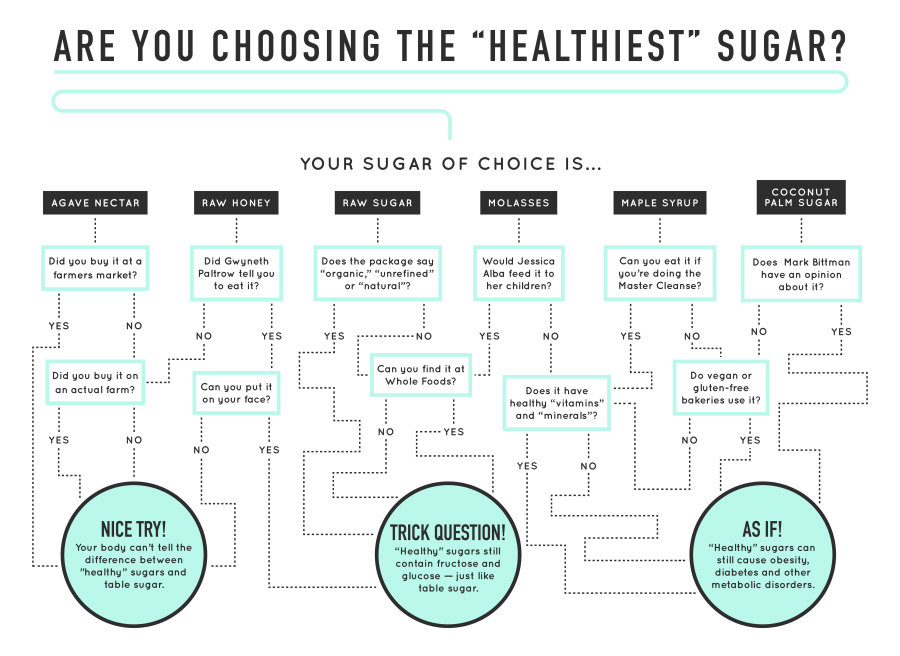
After being completely sugar-free (including refined sugars, raw honey, & fruit) for almost a year to restore my blood sugar balance back in 2012, my palate has shifted and I have a very low tolerance to sweetness.  Although I've reintroduced fruit, then raw honey/unrefined sweeteners, then rarely, some refined sugar, I find that I have a very low threshold for sweetness and I cannot tolerate most refined sugars including all cane/beet, agave, sorbitol, erythritol, etc. and I just don't like stevia.  Coconut palm sugar and palm sugar (non-coconut bearing species) is one of the only (minimally) refined sugars that I can tolerate because it does not spike my blood sugar in the way most refined sugars do. Back in March, I watched pediatric endocrinologist Dr. Robert Lustig's TED talk (20 min) where he lists the 56 names of sugar (his longer groundbreaking 90 min talk here).  While coconut palm sugar was not one of the named, it still is a minimally refined sugar produced in a manner similar to agave or even maple syrup.  


The 
The short attention span 5 minute version: Dr. Robert Lustig on The Colbert Report 

Coconut palm sugar has also been criticized as being "another agave syrup", not being a sustainable industry since any coconut palms used for sugar will not produce viable coconuts, and not traditional in the Philippines.  Other Southeast Asian countries do make use of coconut palm sugar.  I proceed with caution.  Frankly I don't know enough about the industry.  I use both đường thốt nốtsago palm sugar and coconut palm sugar very infrequently and have created a very low glycemic index fruit syrup alternative. 


In looking for a whole food, low glycemic alternative sweetener, I was inspired by the date syrup recipe in The Dairy-Free & Gluten-Free Kitchen.  But in reviewing the actual sugar content, I noticed that dried dates are very high in sugar, as are my previous ingredient choice, dried figs.  Dried apricots and dried prunes are much lower in sugar content by contrast.  So I suggest a syrup of organic unsulfured dried apricots or organic additive-free prunes as a substitute.  I've revised previous recipes that were made with fig to apricots or prunes.

Faux Cheezy-cake with apricot syrup topping

Ingredients:

  • 1.5 c hot water
  • 1 cup organic unsulfured dried apricots or organic prunes
  • 1 tsp lemon juice
Blend water, dried apricots or prunes, 1 tsp lemon juice.  Cool and store in an airtight glass container.  Keeps for 1 week in the fridge.


Also, check out Sudney Mintz's groundbreaking social history of sugar, Sweetness and Power: The Place of Sugar in Modern History which traces the rise of sugar from a precious royal commodity to a working family's common staple.

Ăn Ngon Lành|Eat Delectably!