An anthropological chronicle of my adventures cooking (mostly) Viet food ways using healthy, sustainable choices and real foods (gluten-, dairy-, sugar-, soy-, corn-, and additive-free).
Since I am pregnant, I've been revisiting the pregnancy and postpartum soups in my repertoire.
I was introduced to Miyeok Guk 미역국, a traditional Korean soup eaten on birthdays and postpartum, by my dear friends celebrating their birthdays and when I had my daughter. This is a deceptively simple, powerhouse medicinal soup! Seaweed is nutrient-dense superfood packed with calcium, vitamins A, B-12, C, K, iodine, potassium, chlorophyll, soluble fiber, helps to regulate estrogen/estradiol, and on top of that it binds to heavy metals in the intestines and helps to leach them out of your system. Yay for seaweed! (And yes, I know Fukushima has altered the radiation content in the Pacific and iodine which is abundant in seaweed binds to radiation. But I figure, it's all getting flushed out. Literally. Atlantic seaweed is harder to source and frankly, the US specialty companies that do so charge ridiculous prices. We do what we can and make compromises.)
There are dozens of varieties of edible seaweed. You should choose wakame (which I know is a transliteration of Japanese not Korean) or Miyeok (see, Korean). Though I have very rusty, phonetic reading ability in Hangul | Korean (courtesy of free language class at the Korean Cultural Center in LA way way back--did I mention I also got a BA in linguistics and had/have an affinity for languages?), I lack comprehension. So whenever I am in doubt, I look at the picture and make sure there is a bowl of soup on the label. I start with Junghee's mom's recipe which she shared with my mom after I gave birth. I use other non-traditional nutrient-dense ingredients to amp up the nutritional profile. Miso adds probiotics (and if you really want to go the extra mile, add GMO-free organic natto for the Vitamin K2). I stopped eating soybeans some years ago because of the phyto-estrogens(big deal for women of childbearing age) and the GMO issue. Every now and then I will make an exception for organic, fermented soybeans. So this is another one of my exceptional recipe for fermented soybeans. Read the labels for miso & natto carefully to make sure it's organic, GMO-free, MSG-free and is naturally fermented with koji cultures (rice or barley malt). Natto has a very strong challenging flavor so you may want to omit if you don't like stinky ferments. You can use a bone broth base to have a more rich soup base and/or use fish sauce and dried bonito flakes (be sure it doesn't have MSG though!) If you are using shellfish, the juice from the shellfish will also enrich the soup base. My favorite is clams because they are high in iron and with the seaweed combine to make a blood building/fortifying soup that is perfect for moon cycles, pregnancy, postpartum, and post-surgery. This has been a great boost for me when I start feeling fatigued from the crazy things pregnancy does to one's body. I try to eat it at least once a week or so. When I am too busy to get fresh clams, I used canned. I know. Totally not as good, but way easier to store and have on hand in the pantry. (note 1/15/2017 I've since discovered frozen clams at Whole Foods. Infinitely better than canned!) This is one of my daughter's favorite soups. Once when she was a toddler, she ate a huge adult sized portion of it. And then at bedtime she puked black-green goop all over the bed which I had the parental sixth sense ability to catch in my hands. Mostly. Good times.
Ingredients
~1 cup dried Miyeok/Wakame seaweed
toasted sesame oil
garlic (optional)
sea salt
8 cups water or bone broth
cubed beef steak, whole cleaned clams (shell on), canned clams including juice (choose an additive-free one), shellfish, and/or cubed, organic/GMO-free soft tofu
1-2 tbs of Red Boat fish sauce and/or bonito flakes (make sure it's additive-free)
2 tbs of organic, GMO-free miso to taste
organic, GMO-free natto (optional)
Directions
1. Soak seaweed in water for 10 min in filtered water. Drain. Massage in sesame oil. Use kitchen shears and cut into bite sized pieces. 2. Add sesame oil to pot and saute seaweed for 1 min. Add garlic (if u want) until it warms up. 3. Add beef if using and sauté for a few minutes. 4. Add bone broth or water, fish sauce and/or bonito and bring to a low boil. 5. Add shellfish if using and low boil until just cooked--the clams open up (~5 minutes). 6. Add tofu if using until it's hot. 7. Turn off stove. Add 1-2 tbs miso and natto if using. Sea salt to taste. Serve.
Chả Lụa is a classic & ubiquitous Viet sausage roll that is traditionally pounded into a silky paste, wrapped in banana leaves, and boiled. It's found in bánh mì | VN sandwiches, bánh cuốn | rice rolls,among many other dishes. Like deli meat it can be eaten as a snack; one of my favorite ways to eat it is a mini-sandwich with bánh dầy | mochi. Typical store-made Chả Lụa has MSG/hydrolyzed wheat protein and potato-/wheat-/cornstarch (likely GMO) and they also wrap the roll with a final layer of plastic wrap or aluminum foil before boiling or use nylon twine--all of which release toxins/carcinogens when heated. So Chả Lụa has been off my menu for several years now unless I've got my additive-busting supplements with me.
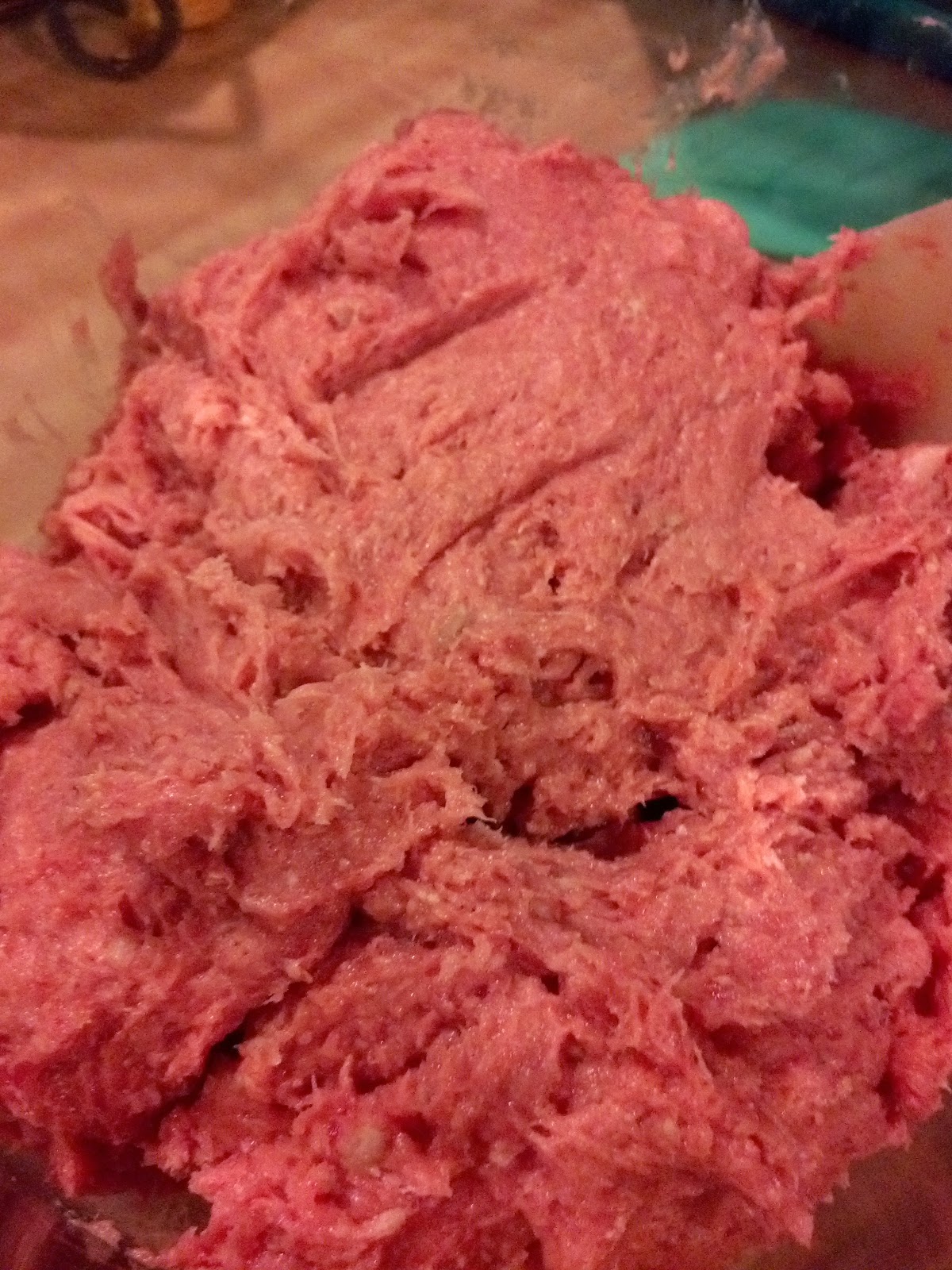
This was a team effort. My thoughtful husband made the first batch when I was enduring first trimester ravening hunger pangs. I made the next round. Like many of these traditional dishes that seem so challenging, I found that making Chả Lụa itself was not hard, but it required time investment in the wrapping & cooking. Because I like my modern tools, I used a food processor to render the meat and fat into a paste (similar to what one would do for meatballs). It only takes 10-15 minutes to get through 3 lbs. Easy peasy. We tried the grinder and it was double the work to then process the grind, so skip that step altogether. The first round, my husband tried the recipe from Bach Ngo's The Classic Cuisine of Vietnam; he wrapped with one layer of banana leaf and boiled the 3-4 rolls for 40 minutes. We ended up with a lot of waterlogged rolls. It was a good effort, but even without the waterlogging, why add water to recipe and then starch to firm in the first place? Also it was not salty or flavorful enough but that could be the waterlogging issue. The next time, I eyeballed Charles Phan's recipe and considered it too plain (only 2 tbs of fish sauce?!), pork belly too fatty and more headcheese-like with pork belly skin-on, which is a different and also delicious variety of Chả Lụa called chả bì. So I fused some of the simplicity of Phan (added salt, no water, no starch, no additional refrigeration) with Ngo's recipe (more fish sauce, baby!), and per my usual modus operandi, we used higher quality ingredients. I believe the quality of the ingredients truly makes or breaks a recipe.
The trickiest part is wrapping it to make it waterproof. We can source fresh banana leaves in the Bay Area at Latino/Caribbean markets or people's gardens, but typically I buy the frozen imported kind at the Viet or Latino markets. The banana leaves need to be rinsed and wiped down to remove any chalky residue. My mom recommends blanching the defrosted banana leaves in boiling water to make them more pliable, less likely to tear. [2/1/2015 note: Mom also says use banana leaves from Thailand, not the Philippines and to cut off the rib for pliability.]
We are still working on wrapping technique; I used double or triple banana leaf layers and wrapped it like a burrito (i.e. rolled and tucked in the ends which are held in place by twine). I only used a single criss cross which was't snug enough; I would recommend the roast tying method. I also went with Phan's steam cooking to reduce the waterlogging though I employed my pressure cooker to shortcut the time. I picked up nice country ribs (butt) from Whole Foods; this is a flavorful fatty cut from sustainably raised pork and in the bulk pack (3 lbs+) it's a reasonably priced $4.99/lb comparable to what one would get buying direct from the farmer. If you must use conventionally-raised pork, my mom recommends soaking it with lemon juice and water overnight to "sweeten" the meat before marinading. The acidulation helps to break down the tough meat fibers from of chemically laden, stressed out pigs.
If the banana leaves are too much for you, I suppose one could substitute parchment paper though I have never tried it. Also, you can shape these into 1.5 inch balls (invest in a cookie scoop!) and make Thịt viên |meatballs. Easy peasy lemon squeezy. Boil in water until cooked through before adding to soups, noodle dishes etc. Freeze the extras.
Ingredients
(Makes 3 rolls)
1.5 tsp unrefined sea salt (Celtic/grey or Himalayan/pink)
1.5 tsp fresh ground organic black pepper
1 tbs organic coconut palm sugar
1 tbs baking soda
6 tbs Red Boat fish sauce 3 lbs sustainably raised pork country ribs (butt), cut into 1.5 inch squares 1-2 tbs of fish sauce 1-2 packages of frozen banana leaves, cleaned, blanched, and wiped dry kitchen twine (each strand should be 4-5 lengths of the roll) In a bowl, mix all the marinade ingredients together. Toss the cubed meat with the marinade. In the ideal world, marinade for 4 hours. Working with small batches, use a food processor or a very high powered blender to make a fine meat paste (approx 3 minutes of processing) and reserve in a large bowl. Add any leftover marinade juices and mix in. Work quickly to keep the paste cold. When it warms, the fat melts making it more difficult to roll. Lay out the banana leaves on a tray or cutting board. You will need 2-3 layers of leaves. Use 1/3 of the meat paste and shape into a cylindrical roll. Use a silicone pastry brush and brush with fish sauce. Roll snugly in the banana leaves, adding more leaves to patch any tears. Fold down the ends and tie with twine using the roast method. Steam in a pressure cooker for 40-60 minutes. Steam in a regular pot for 1.5 hours or boil for 40 minutes. (If you make smaller rolls, it'll need less cooking time.) The interior should be cooked through--that greige meatball color. Some pink is okay if you are using sustainably raised meat. Slice as needed. Store uneaten roll whole in banana leaves in an airtight container in the fridge. Extra rolls can be frozen, banana leaves & all. Steam in the banana leaves to reheat.
This post is for my friends Kyung Jin & Tina who inspired me to explain in the first place. A picture is worth a thousand words, and a blog post is worth a thousand more and you know I can talk your ear off, so this is efficiency at work for ya! Nary a klingon reference to be had. And its free! (Gotta love the new knowledge economy, unless of course one is an unpaid blogger... sigh.)
Organic brown rice(L to R) dried rice grain; soaked overnight; soaked and sprouted
RICE, RICE BABY
Rice is one of the fundamental staples of Asian diets from mythological times. Paleoethnobotanists consider Southeast Asia to be the cradle of rice cultivation back when "continents known as Pangaea and Gondwanaland still existed." I grew up on bowls and bowls of fragrant white jasmine rice. White rice is machine milled removing the bran and the germ (rice DNA repository), and has recently been vilified as being stripped and nutritionally empty, spiking the blood sugar with empty carbohydrates.
Even more recently, all grain has become a fairly new nutritional controversy. By eating the low-saturated fat StandardAmericanDiet (SAD), American folks are eating more carbohydrates and refined grains in particular to compensate for the calories. The issue is that refined carbs (white flour, white rice, white sugar, well all sugar really) are a quick source of energy and quickly convert to sugar (glucose) in our bloodstream. Too much sugar is the devil (okay, not the devil but can be the root cause of a lot of chronic diseases). Gluten-free diets don't escape from this problem entirely either. The major mistake most folks make when switching from SAD to gluten-free is to swap out one highly refined grain-based carb (wheat) for another highly refined grain-based carb (rice, etc). Highly refined, high carbohydrate diets will (eventually) kill you no matter which kind of grain. Gluten-free works best when it is whole food, real food based.
Xena is HANGRY! My kid calls her Xena the Lawyer Princess
One of the major differences between the Paleo/Primal diets and Weston Price (WAPF) is grain (the other differences as far as I can tell are saturated fat and dairy). Paleo diet excludes grain and WAPF promotes soaked and sprouted grains. As I've stated before, I'm not very interested in branding myself as an adherent to xyz nutritional diet and the territorial posturing that comes with it. I'm interested in what works for my body and for my family's health. On this issue, while I share a certain affinity with the Paleo/Primal diet, I do still eat grains (and saturated fat) though we eat fairly low grain. I did an anti-inflammatory elimination diet for a year or so and then tried grain-free/paleo, but it exacerbated my blood sugar. When one is waking 2-3 times a night hungry (and not-pregnant) and spending one's waking hours being very hangry, that is one's body sending a very clear message. So on the issue of grain, I personally lean towards WAPF and my ancestral roots. At the turn of the 20th century, Dentist Weston Price conducted a global exploration of the impact of processed foods on dental health (malnutrition, cavities, dental & jaw malformation) and concluded that nutrition and health are intrinsically linked; dental issues are symptomatic of systemic health. Now, it's important to note he was looking at refined grains (white rice, bleached wheat, white sugar) of the industrial era vs traditional native foods (whole foods, whole grains/starches).
GOT RICE?
Previously I've mentioned, I believe the universalizing generalization of the "ancestral" nutritional diets ignores cultural/regional biome specificity & context. Not all cavemen/natives are alike. Biological anthropologists/archeologists/paleobotanists (i.e. people who actually research paleothic human societies as a full-time living) indicate that plant-based foods--including grains/starches--comprise the majority of the calories in a hunter/gatherer ("starchivore") diet because the women (gatherers) are more consistently successful. Being an anthropologist by training if not by profession/trade, I decided to look into the archeology of the ancestral Viet diet (in the Red River Delta).
16,000-20,000BP (Hoabinh era) Hunter & Gatherer; limestone cave dwellers. Diet consists of mollusks, fish, nuts, berries, roots, fungi, vegetables, wild grains, mammals. The major protein snails, fruits or nuts were the source of daily nutrition needs of Hoabinhian food strategy.
6000 to 3000 BP (DaBut era) Transitional Hunter & Gatherer wood settlements on alluvial plains. Diet consists of bivalve shellfish, nuts, fruit;first evidence for domestication of dog, pig and water buffalo (which are used for rice cultivation)
4000 years ago Agrarian--transition to primarily rice cultivation
Pre-industrialization. I haven't sourced records of this from Viet Nam yet, but Thailand is an interesting comparable case study. Thailand wasn't colonized by the West and rural areas did not experience the industrial exploitation that we see in VN. Modern machine mills producing polished white rice were not introduced until the 1950s and available mostly to the wealthy. Poor folks ate the more nutritious hand-milled rice which did not remove the bran or germ in its entirety.
If one looks at the actual archeological research of the prehistoric era in Southeast Asia, rice does not lead to dental caries/cavities in the same way that maize does. (I don't know when when hand-milling was introduced, suffice to presume that this is unrefined or at the most, partially milled rice).
The agricultural period has long been recognized to have been a very important period in human prehistory. Its timing and consequences, including the effects on human health, have been extensively researched. In recent decades, this has included the idea that there is a universal positive correlation between the adoption of agriculture based on a carbohydrate staple crop and dental caries prevalences. This is mainly based on evidence from America, where maize was the staple crop. On the basis of evidence from prehistoric skeletal samples from a series of prehistoric sites in Southeast Asia, this correlation does not appear to apply in areas of the world where the stale crop is rice. Although we have looked only at dental caries, we suggest caution be applied in the drawing of inferences about substance changes from dental health. Patterns reflecting the adoption of one starchy staple are not necessarily applicable to all such crops. (Source)
I personally don't condone the B-word.
So brown rice is not the same beast as wheat or corn. That said, I don't presume to know whether brown rice is going to work for your body and health. You have to figure that out and you do you. For me and mine, organic brown rice is firmly entrenched in our ancestral and modern tradition. I've mentioned in my Ancestral Foodways post the changes in my personal rice eating history:
I went from eating white jasmine rice every day 1-2 times a day to eating brown rice, then organic brown rice every day to now eating organic brown rice maybe 2-3 times a week and soaking and sprouting the rice...
Me and my beloved started eating brown rice maybe 7+ years ago to be healthier, but since brown rice still has the bran (and therefore all the fiber and nutrients), it is a lot denser, chewier, and frankly, not as tasty to eat.A few years back my husband who was primary cook when my daughter was a baby through toddlerhood noted that soaking the brown rice made a big difference in the taste, texture, edibility. So we started incorporating that into our cooking when we could remember. Rice is after all dried for storage as a part of its harvest production, so soaking reconstitutes the grain and this should be considered a minimal step in the consumption of brown rice. In the last few months, I've learned about sprouting grains & nuts and applied sprouting practices to rice:
soakingand sprouting ... 2-3 days to reduce the anti-nutrients like phytic acid which are inherent in all seeds and to leach out the arsenic from soil contamination that is endemic to all arable land all over the world; seeds contain all the genetic information for new life, so they have innate self-defense in the form of anti-nutrients like phytic acid. Sprouting changes the rice from a seed to a plant and releasing its nutritional value. (Ancestral Foodways)
Since texture is a part of taste, this means sprouted brown rice (aka germinated brown rice, GABA brown rice--for the amino acid GABA that is released by sprouting, or hatsuga genmai) tastes better, with a softer bite. Sprouted rice needs less water to cook than unsprouted rice. Sprouted rice is not as convenient as white rice. It takes planning and forethought, not something I can always spare. It is however hands down way more nutritious and definitely tastier than unsoaked, unsprouted brown rice. So a couple of weeks ago, I realized I can make a mega-batch and freeze it so I will always have sprouted rice on hand. (DUH!) Theoretically I suppose sprouted rice can be dehydrated (I have seen this being sold as a highly marked up product), but you'd have to soak the rice again to reconstitute the grain and I'm sure that takes several hours/overnight. You should probably save the sprouted rice in smaller portions. For us, a family of three, I make ~3 cups which lasts us a several days. This method below therefore yields 3 batches of slightly more than 3 cups (because the rice expands). I use Lundberg Farms organic short grain brown rice which is about $1.14/lb from Costco. I love and prefer jasmine rice but it is too costly when organic. One can also find partially milled brown rice at many Asian markets, but despite the lessened production time, it costs way more than polished white rice! I know there's some backwards Smith-ian economic term to explain this. (BTW Lundberg organic rice has lower arsenic content. I take zeolite and eat seaweed to help reduce the heavy metal build up.
Binchō-tan
*Also I just had an aha!-synapses-firing moment, you can add binchō-tan--Japanese carbonized wood--while soaking and cooking the rice. The carbon in the binchō-tan helps to filter chemicals and heavy metals, including arsenic, that can effect the taste. I was recommended to use binchō-tan while cooking rice a few years back--possibly the Dae Jang Geum effect(full episode)--and I'm thinking the chemistry of why has to do with heavy metals. (Thanks to my friend Miho for introducing me to the use of binchō-tan in rice cooking a few years back.) Do not substitute American charcoal; it is not the same thing.Binchō-tan can be obtained on the internet. I finally can use that kilo of binchō-tan I bought randomly at a now closed organic Chinese store in Milpitas and now I know what to ask for as a souvenir when friends go to Japan.
I use the traditional Asian method (ancient Oriental secret) of water measurement for rice cooking--knuckles. Knuckles are great because well, they allow our fingers to bend and be prehensile. Almost everyone has one. And, it doesn't cost any money. With white rice, it's typically 1 knuckle of water above the rice; with unsprouted brown rice it's typically one and a half knuckles because the bran absorbs so much water; with partially milled rice, it's close to white rice; sprouted brown rice is less than half a knuckle. There is an element of guesstimation on this because everyone likes their rice texture different so you have to figure out what is your optimal texture/water. My mom likes it on the dry side; I take after my dad and like it on the mushy side. My husband likes it on the dry side, my daughter likes it on the soft, but not mushy side. Unlike Dae Jaeng Geum's mentor Lady Han (full episode), I haven't bothered to figure out how to make one pot of rice magically suit everyone. (Though I do notice with the VitaClay, the to layer is drier and the bottom mushier.) One thing we noticed when eating real food, is that we need less because we are getting more nutrients from each bite. Serving size is approximately 1/2 cup per adult. I can get away with eating rice only once a day as long as one of my meals substitutes sweet potato/starchy tuber in its place (for whatever reason, organic potatoes don't work for me. They leave me hungry overnight).
Organic brown rice grains, note opaque germ on the left of each grain (L to R) dried rice grain; soaked overnight; soaked and sprouted. You can't see scale so much (I think the soaked had started to dry out after being in the colander all day), but the soaked grain is 1/3rd larger than the dried grain.
SOAKED & SPROUTED BROWN RICE
Ingredients:
9 cups of organic, short grain brown rice
A lot of water
Day 1 SOAK
Soak 9 cups of organic brown rice in a container with plenty of filtered water overnight. The rice will absorb water so add enough to cover plus 4-6 cups. Leave on the counter in a warm spot, covered with a towel (to keep out light, dust and in my case, opportunist thirsty cat).
Day 2 rice grains reconstituted
note the opaque germ
Day 2 SPROUT
Drain the grains in a colander and rinse it with filtered water. You should notice that each grain is now expanded to a third bigger and there is an opaque area at one apex. This is the germ, where the genetic material of the seed is stored. Leave this on your kitchen counter for a day under a damp towel (I like flour sack cloth). Sometimes, by the end of the day, the rice will have already sprouted which is visible as a notch on the opaque end of the grain (germ). You can cook or freeze it at this point or allow it to sprout more.
Rinse the grains with filtered water. You should notice a little notch or a tail where the germ is. Your rice is now ready to cook or store in the freezer! Rice that has been sprouted needs less water when cooking. Add rice to the pot and cover up to a half a knuckle of water above the rice line depending on your preference. You can also add a chunk of binchō-tan (Japanese carbonized wood) while cooking to filter heavy metals including arsenic from the water.
Ăn Ngon Lành|Eat Delectably!
Sprouted rice in our VitaClay ready to cook. This is a little too much water.
Cooked, sprouted brown rice (a little on the mushy side)
Xôi (aka sweet rice, sticky rice, glutinous rice) is typically a dish for special occasions and breakfast. It can be eaten sweet or savory or sometimes both. There are many, many variations. For this recipe I will be giving two variations Xôi | sweet-salty with coconut milk and Xôi Cúc | sweet-savory with mung beans. I choose to sprout the grains & beans because doings so unlocks the anti-nutrients; grains & beans are after all seeds that contain all the genetic potential of the plant. Seeds have inherent self-defense in the form of anti-nutrients such as physic acid. Sprouting germinate the transformation from seed to plant and makes it more digestible. Start sprouting two days prior to the day you plan to cook. Soaking the whole grain/legume in water helps to reconstitute the grain and reduces cooking time. I discard any water used with the rice because of the issues with inorganicarseniccontamination. I also use organic rice which has lower levels.
Using an unhulled or brown rice changes the texture of the xoi. There is a slight crunchiness and integrity to the grain that one doesn't get with unhulled rice. Xôi Cúc translates as chrysanthemum rice because if the bright yellow color of the hulled mung. Leaving the hull on will change the color to a yellow-green.
Ingredients:
XÔI
2 cups brown glutinous rice
1 cup coconut milk
coconut palm sugar
grey sea salt
XÔI CÚC
2 cups organic brown glutinous rice
2 cups unhulled organic mung beans
2 cups water
3 cloves garlic
4 shallots
coconut oil or pasture-raised lard
black pepper
grey sea salt
Equipment: Bowls for soaking/sprouting, immersion blender, skillet, steamer pot.
SPROUTING THE SEEDS TWO DAYS PRIOR REGULAR XÔI Rinse the rice and then soak the rice in filtered water overnight in a dark place or covered with a dish towel. XÔI CÚC Rinse mung bean. In a separate bowl, soak the mung beans in filtered water overnight in a dark place. DAY BEFORE REGULAR XÔI Drain the rice and discard the water. Do not reuse the water . Rinse and drain. Leave in a dark place. XÔI CÚC Drain the mung beans (water can be composted). Rinse and drain. Leave in a dark place or covered with a dish towel. Once it sprouts a tail, move them into the fridge.
COOKING THE RICE & BEANS REGULAR XÔI Put the rice in the steamer. If your steamer has big holes, cover the pot with parchment paper or banana leaves with small holes poked into it to allow the steam to circulate. Steam for 20 minutes then add coconut milk mixing well. Steam for an additional 10 minutes until the brown rice grain has a slightly al dente texture with a soft interior. Transfer to a serving bowl, add salt and sugar and mix well. XÔI CÚC Cook the mung beans and water in a regular pot for 5 min until just cooked. Drain them. Fry the garlic and shallots in lard or oil for a few seconds until fragrant, then add the mung beans. Add pepper and salt to taste.
Mix together the rice and mung beans and put them in the steamer. If your steamer has big holes, cover the pot with parchment paper or banana leaves with small holes poked into it so the steam can circulate. Steam for 30 minutes until until the brown rice grain has a slightly al dente texture with a soft interior.